


News
PALMA SOLUTIONS JSC
GRI 2027: Key Changes for Companies Using RECs
GRI 2027: Key Changes for Companies Using RECs
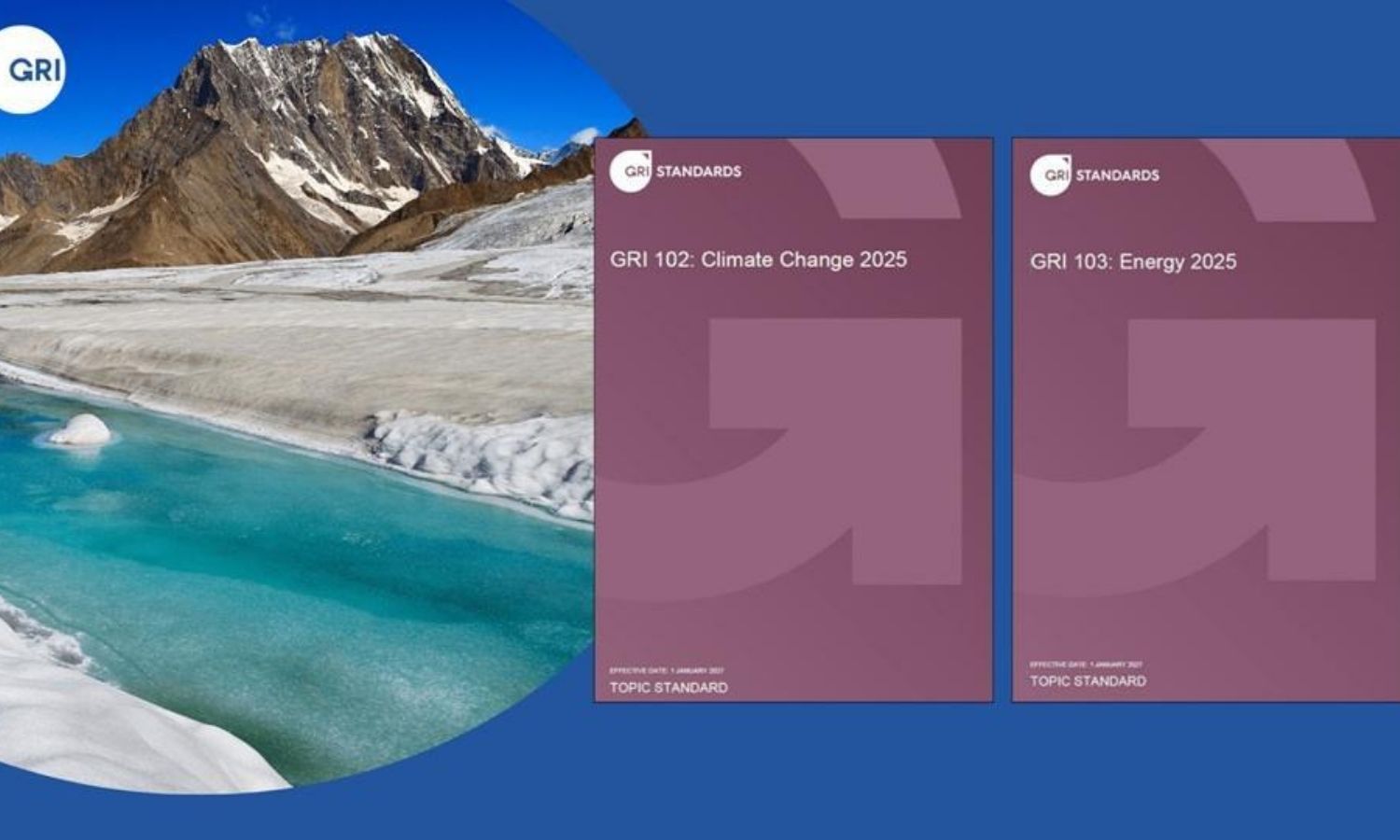
The new GRI topic standards – GRI 102: Climate Change 2025 and GRI 103: Energy 2025 – take effect on January 1, 2027, replacing the energy and emissions disclosures that companies have used since 2016.
For companies purchasing renewable energy through Energy Attribute Certificates (EACs), including Renewable Energy Certificates (RECs), this is a notable change. These instruments are now explicitly addressed in the standards, while their role in reporting Scope 2 emissions under the market-based method is also clearer.
However, this recognition comes with higher transparency requirements. Companies not only need to state that they use renewable electricity, but also need to explain which instruments are used, what portion of electricity is covered, and how those instruments meet the relevant Scope 2 quality criteria.
For companies currently using or planning to use REC/I-REC in their renewable energy strategy, these changes need to be considered from the current procurement and reporting cycle.
Changes and Effective Date
The new standards apply to reports published on or after January 1, 2027, not only to reporting periods that begin on that date. This means that an FY2026 report published in early 2027 may already fall within the scope of the new standards. GRI also encourages early adoption.
Key changes include:
GRI 302: Energy 2016 – replaced by GRI 103: Energy 2025.
GRI 305: Emissions 2016 – disclosures on greenhouse gas emissions 305-1 to 305-5 are replaced by GRI 102: Climate Change 2025; disclosures related to air emissions remain.
GRI 201-2 – content related to financial implications and risks and opportunities arising from climate change is moved to the relevant disclosures in GRI 102.
Key Changes for Companies Using RECs
|
Topic |
GRI 302 / 305 (2016) |
GRI 102 / 103 (2025) |
|
Contractual instruments |
Mainly addressed indirectly |
EACs, RECs, PPAs, and green electricity products are explicitly identified |
|
Certificate quality |
Mainly an internal management/procurement issue |
Need to describe how the instrument meets quality criteria |
|
Instrument disclosure |
Focused on the percentage of renewable energy |
Recommended to disclose the type of instrument together with the amount and % of electricity covered |
|
Scope 2 targets |
The method may not have been clearly stated |
Need to identify whether the target is based on location-based or market-based |
|
Value chain energy |
More limited scope |
Expanded to significant energy consumption upstream and downstream |
|
Energy information |
Focused mainly on consumption data |
Expanded to policies, commitments, transition plans, and impacts |
1. RECs/EACs Are Explicitly Addressed in the GRI Standards
In the 2016 standards, the role of contractual instruments in demonstrating the use of renewable electricity was largely understood through the relevant guidance.
GRI 103 now explicitly identifies Energy Attribute Certificates (EACs), Renewable Energy Certificates (RECs), Power Purchase Agreements (PPAs), and green electricity products as instruments that can be used to demonstrate the renewable portion of the electricity purchased by a company.
These instruments also appear at the policy level. The use of contractual instruments is given as an example of an energy-related policy to support the transition to renewable energy sources, alongside measures to improve energy efficiency and promote the use of renewable energy in the supply chain.
For companies using I-REC or equivalent EACs, this further clarifies the role of energy attribute certificates in renewable electricity procurement strategies and Scope 2 reporting.
2. Companies Need to Describe How Certificates Meet Quality Criteria
This is one of the most direct changes for companies using RECs.

When companies use contractual instruments to report purchased electricity, they need to describe how these instruments meet quality criteria to ensure the accuracy and consistency of the reported information.
These criteria are based on the GHG Protocol Scope 2 Guidance and include familiar principles for managing energy certificates:
Unique attributes and claims: the energy attributes must be linked to a specified unit of electricity and must not be claimed by multiple parties at the same time.
Tracking and cancellation: certificates must be tracked and cancelled/retired in an appropriate registry by or on behalf of the reporting organization.
Time linkage: certificates should be issued and used within a period that is appropriate to the reported electricity consumption period.
Market boundary: certificates must come from a market that is appropriate to where the electricity is consumed and where the claim is made.
GRI 102 also reflects these criteria in its Scope 2 guidance and adds content related to supplier emission factors and the residual mix.
This means that purchasing RECs is no longer simply a question of “does the company have certificates or not?”, but increasingly a question of “do those certificates provide a sufficient basis to support claims about renewable electricity and Scope 2?”
Certificate quality is therefore not only an internal procurement issue. From the new reporting cycle, companies need to be able to explain more clearly the origin, tracking, and use of the certificates.
3. Scope 2 Continues to Distinguish Between Location-Based and Market-Based
GRI 102 continues to require companies to disclose Scope 2 emissions using the location-based method, while also disclosing the market-based result when that method is applied.
The two methods reflect two different perspectives:
Location-based Scope 2 reflects the average emissions intensity of the electricity system in the area where the company consumes electricity.
Market-based Scope 2 reflects a company’s electricity purchasing choices through qualifying contractual instruments, including EACs/RECs, PPAs, and appropriate green electricity products.
Therefore, a company’s purchase and cancellation of RECs does not change the location-based result. The value of RECs is reflected in the market-based method when the relevant conditions are met.
For each Scope 2 emissions reduction target, companies also need to clarify whether the target is established using the location-based or market-based method. When a company sets a market-based target, the Scope 2 quality criteria also become particularly important for the instruments used to support that target.
4. Companies Need Greater Transparency in How They Purchase Renewable Electricity
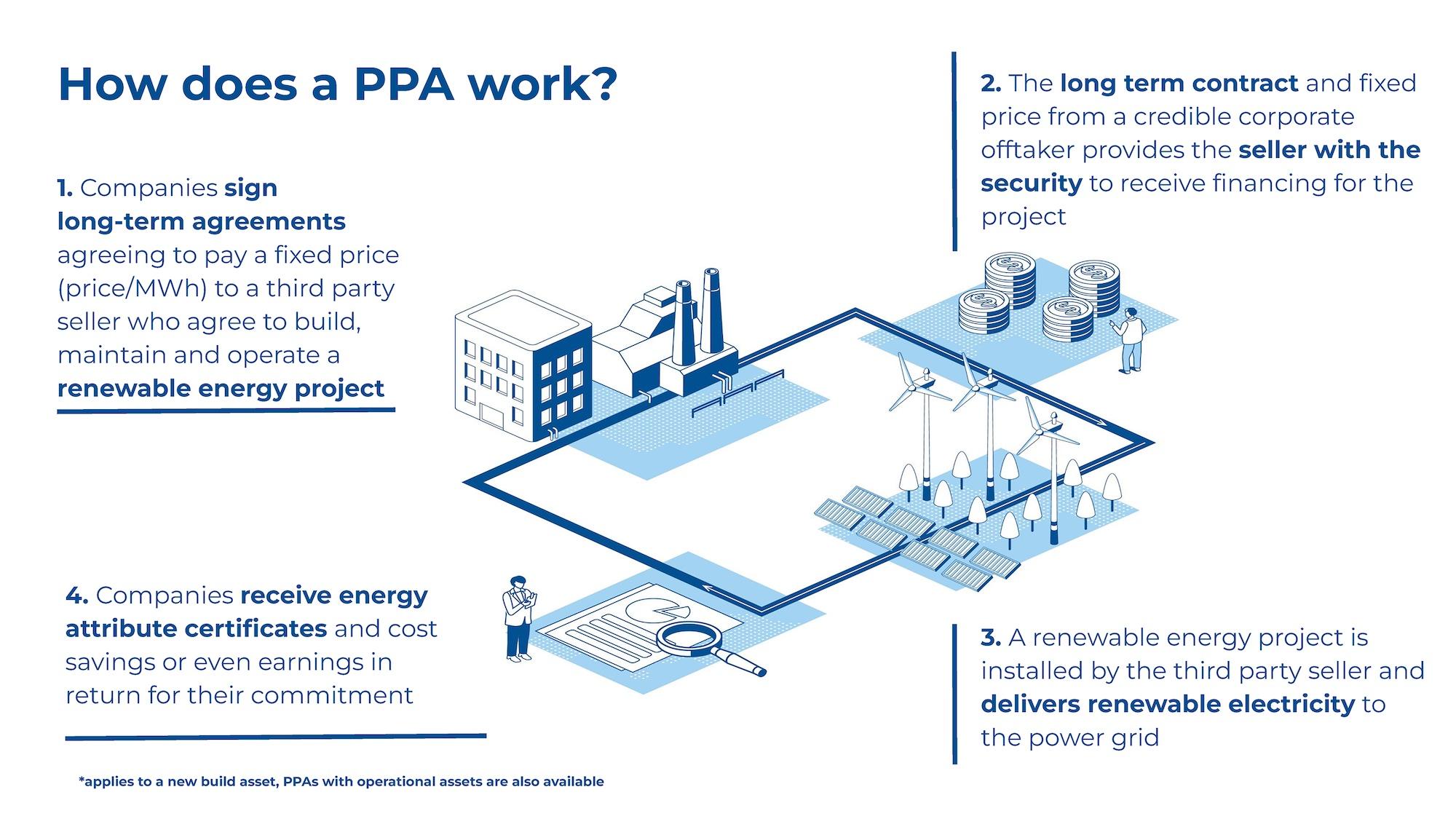
Both GRI 102 and GRI 103 expand the level of information related to how companies manage and purchase energy.
Companies are encouraged to report the type of instrument used – such as a PPA, a green electricity program from an electricity supplier, or separately purchased energy certificates – together with the amount of electricity and the percentage of total purchased electricity covered by each type of instrument.
Companies should also clearly distinguish whether renewable electricity data are determined from grid-average data or from contractual instruments, while providing information related to the electricity generation mix in the market where electricity is purchased.
This creates a more complete picture of a company’s renewable electricity strategy. Rather than reporting only a final percentage of renewable electricity, readers of the report can understand how the company achieved that percentage.
5. Energy Reporting Expands to the Value Chain
Another notable change in GRI 103 is the expanded focus on significant energy consumption in the upstream and downstream value chain.
Companies need to identify categories in the value chain where significant energy consumption occurs. The guidance also recommends distinguishing consumption from renewable and non-renewable sources, while identifying cases where data are estimated rather than provided directly by suppliers or partners.
This makes the energy mix of suppliers increasingly directly connected to a company’s ESG information.
For companies with large production or logistics networks in Asia and emerging markets, encouraging suppliers to use renewable electricity can therefore become a more important part of their energy strategy and value chain reporting.
Where suppliers do not yet have the conditions to directly invest in renewable energy systems or participate in a PPA, EACs/RECs can be one flexible tool to help companies and their supply chains gradually increase the share of renewable electricity.
6. Energy Reporting Is No Longer Just About the Numbers
The new standards also expand reporting from consumption data to how companies manage the energy transition.
Companies are expected to provide information on energy policies, commitments and targets, transition plans, as well as the impacts of energy use and the transition to renewable energy on people, the environment, and the economy.
GRI 102 also presents renewable electricity procurement targets as an example related to targets for transitioning away from fossil fuels, together with monitoring and reporting progress.
This shows that renewable electricity procurement increasingly needs to be viewed as part of an overall energy transition strategy, rather than as a standalone certificate purchase activity at the end of the reporting period.
What Should Companies Prepare Before 2027?

The effective date is approaching, while many decisions related to electricity consumption and certificates used for FY2026 reporting have already been or are being made. Companies using REC/I-REC can begin preparing through four steps:
1. Review the Current REC/EAC Portfolio
Check the generation source, generation period (vintage), market, registry system, and cancellation/retirement status of the certificates being used.
2. Map RECs to Scope 2 Reporting
Identify which portion of electricity consumption is covered by contractual instruments and how those instruments are reflected in the market-based method.
3. Standardize Supporting Documentation
Maintain complete information on the generation source, registry records, retirement statements, and documents needed to explain how the certificates meet the relevant quality criteria.
4. Integrate RECs into the Long-Term Renewable Electricity Procurement Plan
Rather than purchasing certificates only at the end of the reporting period, companies can integrate REC requirements into their annual energy plans, Scope 2 targets, and ESG strategy.
From REC Procurement to a More Transparent Renewable Electricity Strategy
The new GRI standards do not change the nature of RECs. Instead, they clarify what companies need to demonstrate around the use of these instruments: which instruments the company is using, what the electricity behind the certificates is, what portion of consumption is covered, how the certificates are managed and cancelled, and how the renewable electricity strategy is linked to the company’s climate goals.
For companies that already manage certificate sources, documentation, and retirement well, the new requirements may make the use of RECs more transparent and easier to explain in reporting. Conversely, certificates with unclear origins or incomplete documentation may create gaps when companies need to explain claims about renewable electricity and Scope 2.
It Is Time to Review the Company’s REC Strategy
With the new standards taking effect in 2027, this is an appropriate time for companies to review how they are using REC/I-REC in their renewable electricity strategy and Scope 2 reporting.
Palma provides renewable energy and I-REC solutions, supporting companies from identifying renewable electricity needs and selecting appropriate certificate sources to managing certificate issuance and cancellation and building documentation to support relevant targets and reporting requirements.
For companies currently using or planning to use I-REC for Scope 2 and renewable electricity targets, preparing early will help move from “purchasing certificates” to a renewable electricity strategy that can be traced, explained, and clearly reported.
Note: The above content provides an overview of the relationship between REC/I-REC and the GRI 102: Climate Change 2025 and GRI 103: Energy 2025 standards. For specific GRI reporting implementation, companies should refer to the official GRI Standards and seek appropriate professional advice.
References: Global Reporting Initiative (GRI); ESG Today; Báo Mới.
11/08/2026 14:54:19
News other
_-08-01-2026-23-58-52.jpg "“Operation & Maintenance – Palma Solar Light” Technical Training")


_-08-01-2026-23-54-30.jpg "Why can the same solar technology deliver different performance across industrial plants?")
![[PALMA x NOVALAND] WORKSHOP ON MAINTENANCE AND SERVICING OF SOLAR LANDSCAPE LIGHT PLL-30 AT NOVA HILLS – MUI NE](https://palma.com.vn/upload/z3634653067260_15cb1f4d62b14f3a684fdf4ee9de4870_-11-08-2022-13-55-36.jpg "[PALMA x NOVALAND] WORKSHOP ON MAINTENANCE AND SERVICING OF SOLAR LANDSCAPE LIGHT PLL-30 AT NOVA HILLS – MUI NE")

Search
Breaking news
_-06-02-2026-14-31-59.jpg "Understanding kWp and kWh: The First Step Toward Effective Solar Investment")


_-24-10-2021-21-55-01.png "MicrosoftTeams-image (8)_-24-10-2021-21-55-01.png")
_-21-04-2022-13-38-01.png "PALMA SOLUTIONS JSC")
CONTACT US
MAP
Copyright © 2020 PALMA SOLUTIONS JSC
