

News
PALMA SOLUTIONS JSC
Why can the same solar technology deliver different performance across industrial plants?
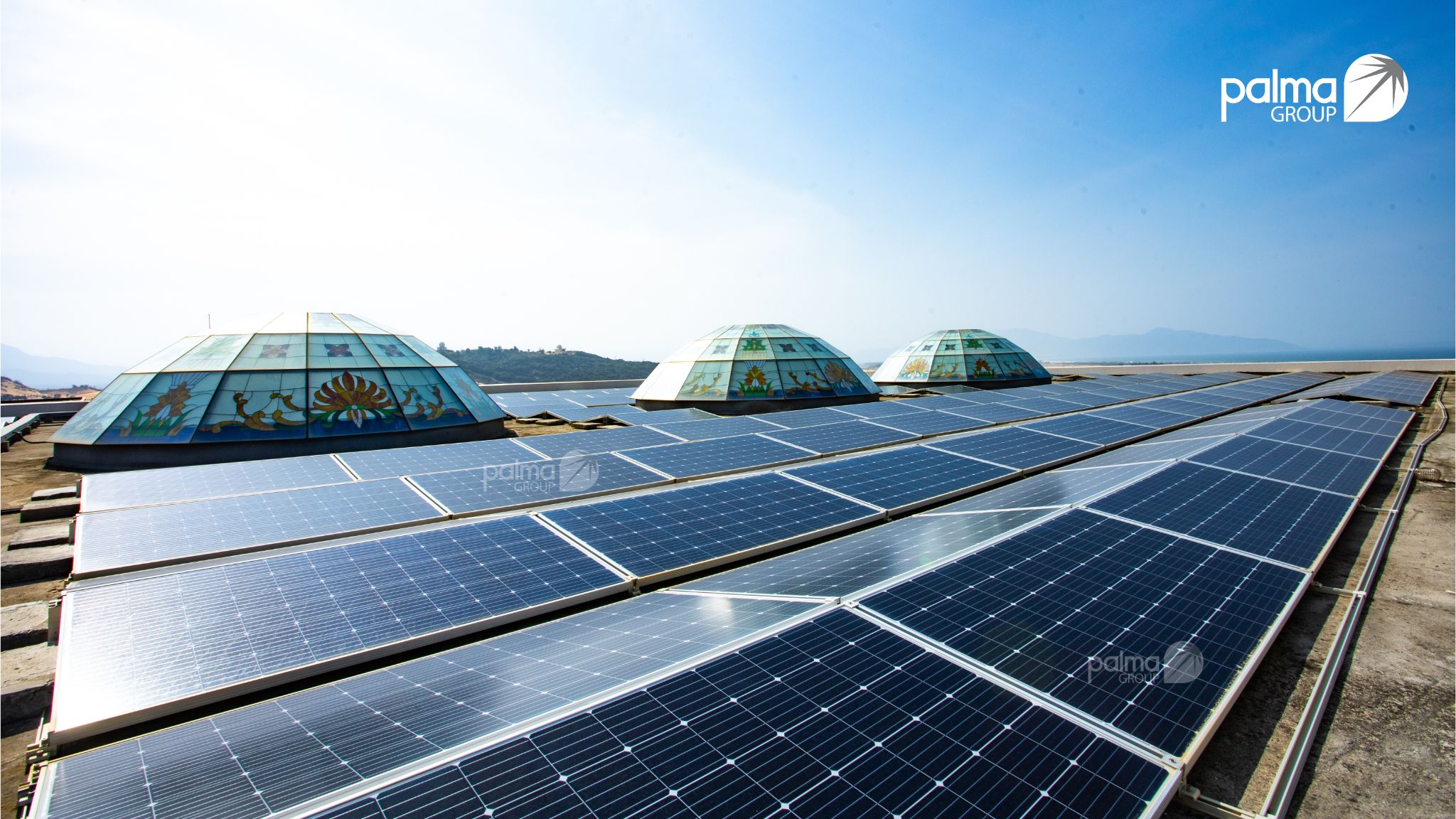
In the practical operation of industrial rooftop solar systems, it is not uncommon for facilities using the same type of PV modules, the same inverters, and even similar system configurations to exhibit significantly different performance and energy yields over time. This reality highlights an important point: in the solar sector, technology is not defined solely by equipment, but by how a system is implemented and operated under real-world conditions.
First and foremost, system design plays a decisive role in how effectively technology is utilized. Installation orientation, tilt angle, string configuration, DC/AC ratio, and alignment with the plant’s load profile all have a direct impact on operational efficiency. A sub-optimal design can prevent equipment from operating within its highest efficiency range, even when hardware quality remains unchanged.
In addition, environmental conditions and operating context create substantial differences in performance. High temperatures, industrial dust, humidity, coastal environments, or factories running multiple shifts continuously all accelerate system degradation. While these factors cannot be eliminated, they can be effectively managed if properly monitored.
More importantly, operation and maintenance (O&M) is the key determinant of long-term performance. After commissioning, a solar power system does not maintain a constant efficiency; its performance continuously evolves over time. Without adequate monitoring, minor issues - such as gradual yield losses, string imbalances, or equipment faults - may persist unnoticed, leading to cumulative losses.
In modern O&M practice, technology does not reside in a single task, but in the ability to continuously track operational data, detect anomalies at an early stage, and intervene at the right moment. This is why well-managed systems tend to maintain more stable performance, even when built on the same equipment platform.
From this perspective, O&M is not a “post-installation” activity, but rather the element that completes the technological value of a solar power system, ensuring that the original design is operated correctly and efficiently throughout the project lifecycle. And it is precisely at this operational stage that O&M becomes the means by which technology retains its value over time - an approach that Palma consistently places at the core of the solar systems it.
08/01/2026 23:54:30
News other
_-08-01-2026-23-54-30.jpg "Why can the same solar technology deliver different performance across industrial plants?")


![[PALMA x NOVALAND] WORKSHOP ON MAINTENANCE AND SERVICING OF SOLAR LANDSCAPE LIGHT PLL-30 AT NOVA HILLS – MUI NE](https://palma.com.vn/upload/z3634653067260_15cb1f4d62b14f3a684fdf4ee9de4870_-11-08-2022-13-55-36.jpg "[PALMA x NOVALAND] WORKSHOP ON MAINTENANCE AND SERVICING OF SOLAR LANDSCAPE LIGHT PLL-30 AT NOVA HILLS – MUI NE")
_-06-02-2026-14-31-59.jpg "Understanding kWp and kWh: The First Step Toward Effective Solar Investment")
Search
Breaking news
_-24-10-2021-21-55-01.png "MicrosoftTeams-image (8)_-24-10-2021-21-55-01.png")
_-21-04-2022-13-38-01.png "PALMA SOLUTIONS JSC")
CONTACT US
MAP
Copyright © 2020 PALMA SOLUTIONS JSC
