


News
PALMA SOLUTIONS JSC
ESG Risks and Their Importance for Businesses
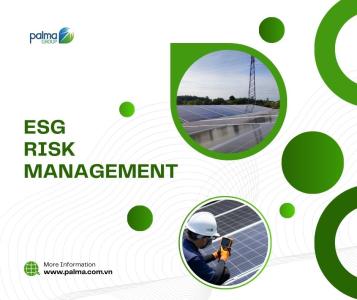
When companies implement ESG strategies, they also face a range of risks, known as ESG risks, which can affect their business performance and reputation. Understanding and effectively managing these risks not only helps companies minimize potential losses but also delivers long-term benefits, ranging from enhanced brand image to improved investment attractiveness. In this article, we explore what ESG risks are, why they matter, and the benefits that effective ESG risk management can bring to businesses.

What Are ESG Risks?
ESG risks (Environmental, Social, and Governance) refer to the potential risks that a business may face in relation to environmental, social, or governance issues. These risks can be viewed as the hidden part of an iceberg beneath a company’s business operations. While traditional risk management focuses on direct financial risks, ESG risk management goes deeper, emphasizing the broader impact of corporate activities on society and the environment.
According to a study by McKinsey, companies that improve their ESG scores alongside growth and profitability tend to achieve annual shareholder returns that are approximately two percentage points higher than those of companies focusing solely on financial indicators.
Components of ESG Risk
Environmental Risks
Environmental risks include issues ranging from climate change and resource depletion to pollution and biodiversity loss. This is often the most visible aspect of ESG. For example, Unilever has committed to reducing its environmental footprint by 50% as a proactive approach to managing environmental challenges. Such sustainability initiatives not only help Unilever lead its industry but also enhance its brand reputation.
For instance, Coca-Cola has faced strong backlash in India after being accused of polluting water sources and depleting groundwater in areas surrounding its production facilities.
Social Risks
A company’s impact on society and local communities lies at the core of social risks. Issues such as labor practices, human rights, and consumer protection are addressed within this category. A notable example is Patagonia, which donates 1% of its sales revenue to environmental protection initiatives, thereby fostering customer loyalty and strengthening brand credibility through social responsibility.
By contrast, apparel companies such as H&M and Nike have experienced reputational crises after being accused of using child labor and maintaining harsh working conditions at factories in developing countries.
Governance Risks
These risks relate to challenges in how a company is governed, including ethical standards, leadership practices, and internal control systems. Without strong governance, companies can easily become entangled in scandals, legal disputes, and loss of investor trust. As a result, businesses with robust governance practices are generally perceived as more reliable and better positioned for long-term stability.
For example, in 2008, Siemens was found to have operated extensive bribery and corruption schemes in its business activities, particularly in bidding and contract negotiations with governments and major corporations worldwide. This corruption scandal led to a global investigation, and Siemens ultimately paid fines totaling approximately USD 1.6 billion to settle the related charges.
What are the Benefits of ESG Risk Management?

Effective ESG risk management delivers a wide range of benefits for businesses, including:
Financial Benefits
Cost savings:
ESG risk management helps companies reduce costs by adopting sustainable practices. Measures such as improving energy efficiency and minimizing waste lower operating expenses. Companies that use renewable energy sources often reduce utility costs, thereby increasing profitability.
Improved investment opportunities:
Companies that manage ESG risks effectively are more attractive to investors seeking sustainable and lower-risk businesses. These companies can access capital more easily and at lower costs, strengthening their financial capacity for long-term development.
Enhanced access to global markets:
Companies committed to ESG can expand international business opportunities. As environmental and social regulations continue to tighten globally, compliance with ESG standards enables businesses to enter international markets more easily and meet the requirements of partners and customers across different regions.
Non-Financial Benefits
Enhanced brand reputation:
Stakeholders-including consumers, partners, and communities—tend to favor companies that demonstrate strong ESG risk management. This helps build a solid brand reputation, positions the company as an ethical and responsible industry role model, and fosters customer loyalty.
Regulatory compliance and reduced legal risk:
ESG risk management helps companies comply with existing regulations and avoid penalties, thereby protecting both reputation and business operations. It also enables organizations to anticipate future regulatory changes and minimize legal risks.
Sustainable and stable growth:
Companies that adopt ESG risk management can achieve sustainable growth and build a strong foundation for the future. This not only supports long-term development but also enhances resilience to market fluctuations and unforeseen challenges.
Attracting and retaining talent:
Companies with effective ESG strategies are better positioned to attract talent—especially younger generations who increasingly value sustainability and ethical practices in the workplace. ESG standards help create a positive work environment, reduce employee turnover, and improve overall performance.
By integrating ESG risk management, companies not only increase profitability but also build a strong and sustainable image in the eyes of customers and stakeholders.
What Are the Benefits of Having an ESG Risk Management Plan?
Having a clear and well-defined ESG (Environmental, Social, Governance) risk management plan delivers significantly greater effectiveness than implementing ESG initiatives without a structured approach. Key benefits include:
1. Greater proactivity and reduced exposure to potential risks
With a plan:
An ESG risk management plan enables companies to proactively identify and address potential issues across environmental, social, and governance dimensions. A clear strategy helps organizations prepare for risks such as pollution incidents, labor rights violations, or weak governance practices, thereby minimizing damage and protecting long-term interests and reputation.
2. Improved forecasting and flexible response to change
With a plan:
An effective ESG risk management plan allows companies to anticipate regulatory changes, market trends, and evolving community expectations. This enables proactive strategic adjustments, risk mitigation, and the capture of opportunities for sustainable development.
3. Enhanced financial performance and access to capital
With a plan:
Companies with well-defined ESG risk management plans are more attractive to investors, as they are perceived as capable of managing non-financial risks effectively. These companies can access investment capital more easily, as they are viewed as sustainable and supported by robust long-term strategies.
4. Improved brand reputation and customer relationships
With a plan:
A clear ESG risk management plan helps companies maintain transparency and demonstrate commitment to environmental protection, employee rights, and ethical governance standards. This builds customer trust and fosters long-term brand loyalty.
5. Protection against legal issues and financial penalties
With a plan:
Having an ESG risk management plan enables companies to comply more effectively with legal requirements and reduce the risk of administrative penalties. In addition, organizations can proactively adapt to new regulations, minimizing costs and avoiding litigation.
19/12/2025 15:21:58
News other
_-08-01-2026-23-54-30.jpg "Why can the same solar technology deliver different performance across industrial plants?")


![[PALMA x NOVALAND] WORKSHOP ON MAINTENANCE AND SERVICING OF SOLAR LANDSCAPE LIGHT PLL-30 AT NOVA HILLS – MUI NE](https://palma.com.vn/upload/z3634653067260_15cb1f4d62b14f3a684fdf4ee9de4870_-11-08-2022-13-55-36.jpg "[PALMA x NOVALAND] WORKSHOP ON MAINTENANCE AND SERVICING OF SOLAR LANDSCAPE LIGHT PLL-30 AT NOVA HILLS – MUI NE")
_-06-02-2026-14-31-59.jpg "Understanding kWp and kWh: The First Step Toward Effective Solar Investment")
Search
Breaking news


_-24-10-2021-21-55-01.png "MicrosoftTeams-image (8)_-24-10-2021-21-55-01.png")
_-21-04-2022-13-38-01.png "PALMA SOLUTIONS JSC")
CONTACT US
MAP
Copyright © 2020 PALMA SOLUTIONS JSC
