


News
PALMA SOLUTIONS JSC
Solar Power Is More Than Installing Panels: A Quality Implementation Journey from A to Z
Solar power can help businesses save 20–30% on electricity costs—depending on their scale and electricity consumption model—while also contributing to CO₂ emissions reduction, environmental protection, and ESG commitments. With an average payback period of 4–6 years and a system lifespan of up to 25–30 years, solar power is not only an economic investment but also a sustainable development solution for businesses.
When looking at a completed solar power system installed on a factory rooftop, many people only see neatly arranged rows of solar panels and the electricity generated each day.
However, for a solar project to operate efficiently, safely, and deliver long-term investment value, it requires a comprehensive implementation process involving multiple carefully calculated and closely controlled stages. At Palma, solutions are designed and constructed in accordance with current technical standards, such as TCVN and IEC, using equipment from reputable manufacturers, including solar panels with efficiency above 20%, inverters certified under IEC 62109 for safety, and equipment warranties ranging from 5–10 years, depending on the equipment type. These measures aim to ensure stable, safe, and sustainable performance throughout the project’s lifecycle.
From site surveys and technical design to construction, commissioning, and operation, every stage plays an important role in determining the system’s performance, lifespan, and overall operational efficiency.
Step 1: Site Survey and Demand Assessment
Every business has different operating characteristics and electricity consumption needs. Therefore, before proposing a solution, the engineering team conducts an on-site survey to assess:
- The current condition of the factory roof or building;
- The roof structure and load-bearing capacity;
- Solar radiation conditions;
- Potential shading factors;
- Electricity consumption records and operating loads.
The survey data provides an important foundation for developing a solution that is suitable for the customer’s actual needs.
Step 2: Technical Quality and Investment Efficiency
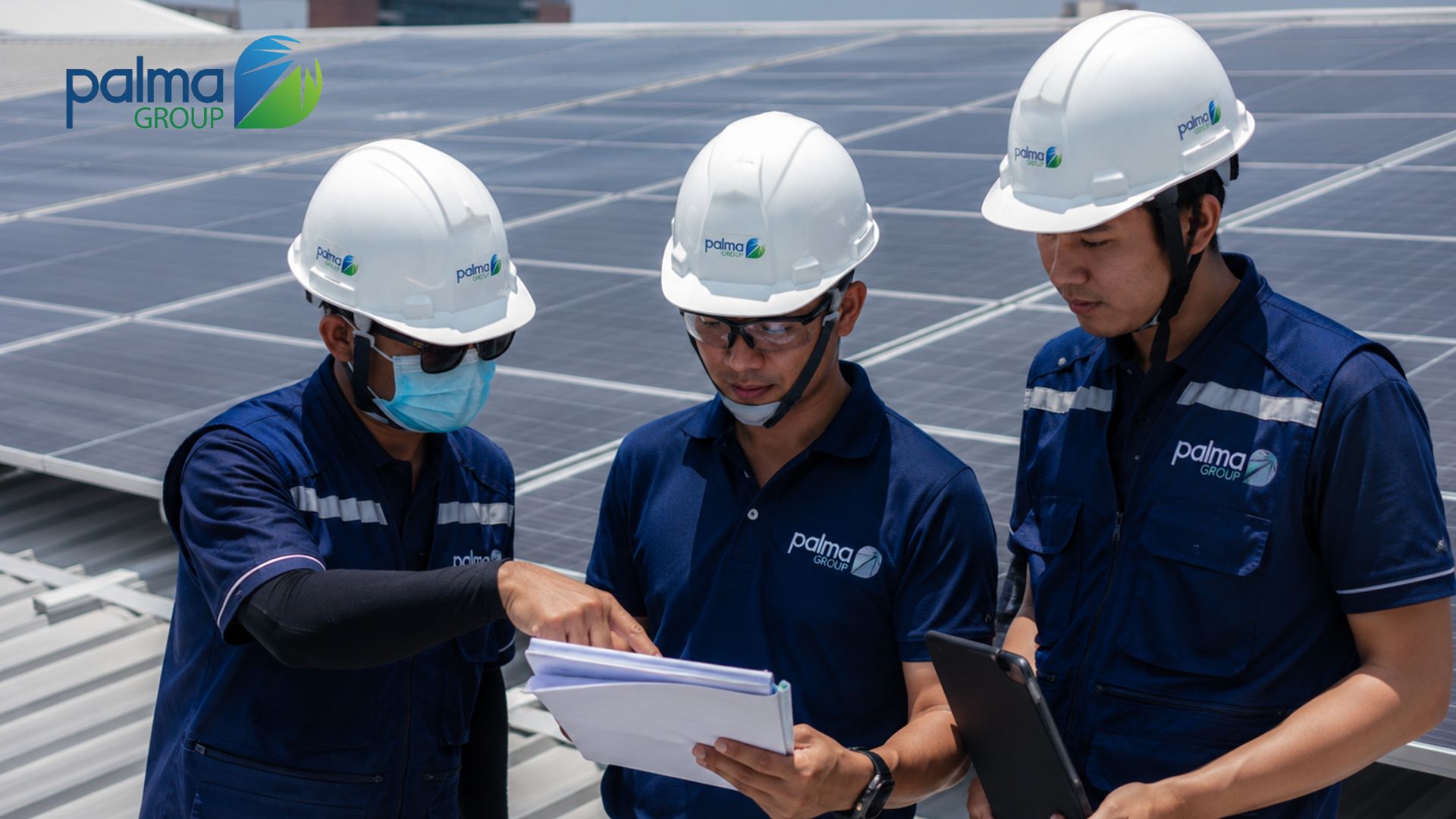
After completing the survey, the engineering team develops a design solution that is appropriate for the existing structure and the business’s electricity consumption needs.
This stage includes calculating the system capacity; arranging the solar panels; designing the DC and AC systems; selecting inverters, solar panels, and protection equipment from reputable manufacturers with clear origins and compliance with technical standards; simulating expected electricity generation; and evaluating investment efficiency through indicators such as electricity output, electricity cost savings, and payback period (ROI). The team also estimates the annual CO₂ emissions that can be reduced compared with electricity consumption from the traditional power grid.
A suitable design not only helps optimize electricity generation and improve investment efficiency, but also ensures safety, long-term operational stability, and contributes to the business’s sustainable development goals.
Step 3: Material Preparation and Construction
Once the proposed solution has been approved, the project enters the implementation stage.
The main activities include:
- Preparing materials and equipment;
- Installing the structural mounting system;
- Installing the solar panels;
- Installing inverters and electrical cabinets;
- Cabling and completing the electrical connections.
Throughout the construction process, quality management and occupational safety are prioritized to ensure both project progress and construction quality.
Step 4: Inspection, Commissioning, and Energization
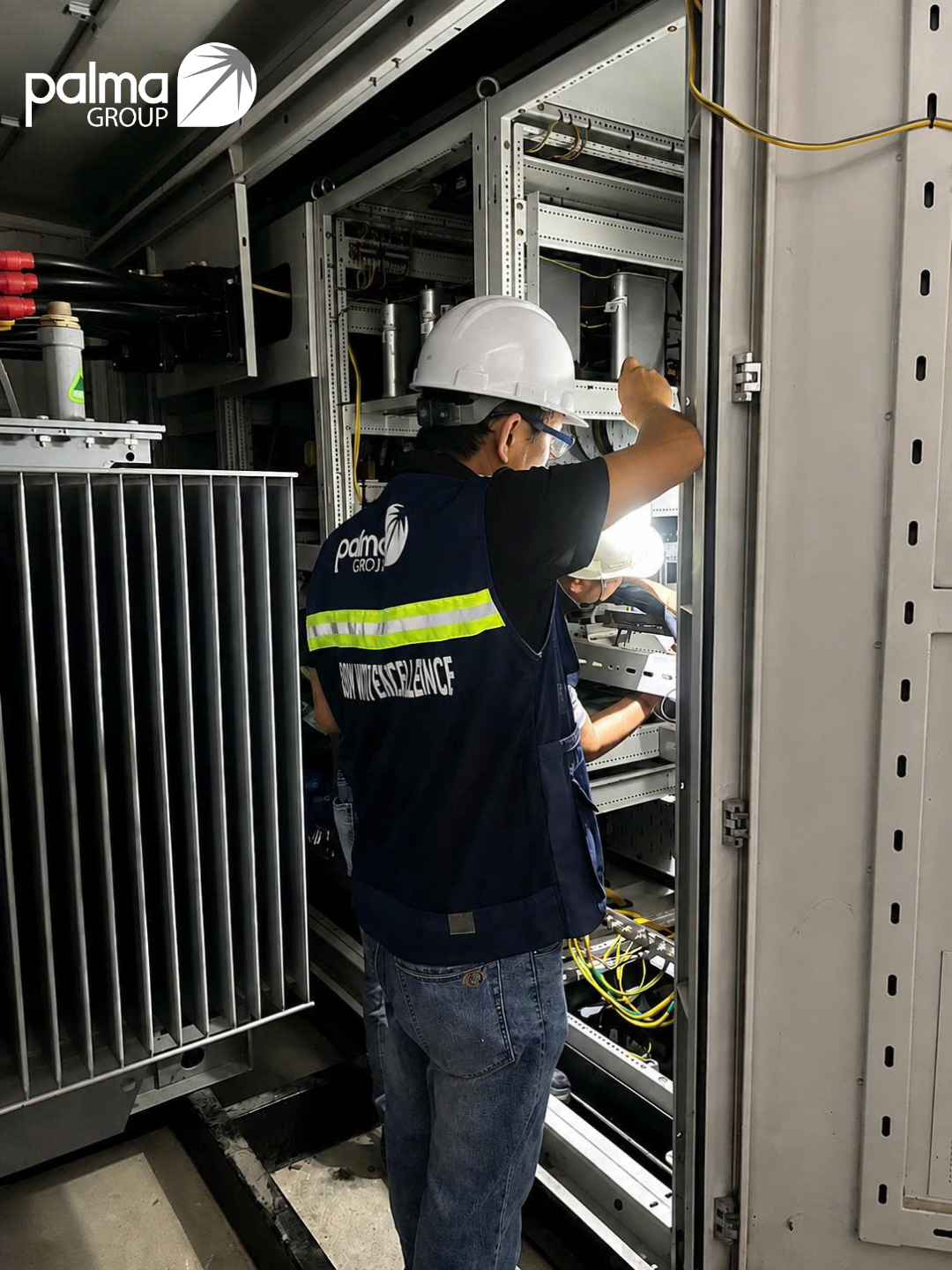
Before the system is put into operation, the entire system is inspected and tested in accordance with applicable technical standards.
The commissioning process typically includes:
- Checking electrical connections;
- Measuring operating parameters;
- Inspecting the protection system;
- Checking the inverter’s power generation capability;
- Inspecting the monitoring system.
Once the commissioning process is completed, the system is energized and begins commercial electricity generation.
Step 5: Operational Monitoring and Performance Optimization
The completion of installation is not the end of the project.
During operation, the system needs to be monitored regularly to ensure stable performance.
Through the monitoring platform, businesses can track:
- Electricity generation;
- System performance;
- Inverter operating status;
- Abnormal alerts.
Regular monitoring and performance assessment help identify potential issues at an early stage and maintain investment efficiency throughout the project’s operating life.
The Value of a Project Goes Beyond Installation
An efficient solar power system is the result of close coordination between accurate surveys, suitable design, quality construction, and professional operation.
Each stage directly affects electricity generation, safety, payback potential, and the project’s long-term operational efficiency.
At Palma Group, we support customers throughout the entire project lifecycle—from solution consultation, design, and implementation to operation and maintenance—with the aim of optimizing investment efficiency and ensuring stable system performance throughout its operating period.
Beyond economic value, each solar power system also contributes to greenhouse gas emissions reduction, supports businesses in achieving their ESG goals (Environmental, Social, and Governance), strengthens competitiveness, and gradually advances their Net Zero roadmap.
Is your business suitable for a solar power investment? Contact Palma Group for a site survey and consultation on a solution tailored to your business’s actual needs and conditions.
08/09/2026 14:23:52
News other
_-08-01-2026-23-54-30.jpg "Why can the same solar technology deliver different performance across industrial plants?")


![[PALMA x NOVALAND] WORKSHOP ON MAINTENANCE AND SERVICING OF SOLAR LANDSCAPE LIGHT PLL-30 AT NOVA HILLS – MUI NE](https://palma.com.vn/upload/z3634653067260_15cb1f4d62b14f3a684fdf4ee9de4870_-11-08-2022-13-55-36.jpg "[PALMA x NOVALAND] WORKSHOP ON MAINTENANCE AND SERVICING OF SOLAR LANDSCAPE LIGHT PLL-30 AT NOVA HILLS – MUI NE")
_-06-02-2026-14-31-59.jpg "Understanding kWp and kWh: The First Step Toward Effective Solar Investment")
Search
Breaking news
_-24-10-2021-21-55-01.png "MicrosoftTeams-image (8)_-24-10-2021-21-55-01.png")
_-21-04-2022-13-38-01.png "PALMA SOLUTIONS JSC")
CONTACT US
MAP
Copyright © 2020 PALMA SOLUTIONS JSC
