


News
PALMA SOLUTIONS JSC
Greenhouse Gas Inventory (GHG Inventory): Why Is It the First Step in Every ESG Strategy?
As the global transition toward green growth and Net Zero accelerates, ESG is no longer a framework reserved for large corporations or publicly listed companies. Increasingly, international customers, financial institutions, and global supply chains require businesses to demonstrate their sustainability performance through transparent data on environmental impact, greenhouse gas emissions, and energy consumption.
However, many businesses seek to reduce emissions, invest in clean energy, or prepare ESG reports before fully understanding a fundamental question: How much are they currently emitting, and where do those emissions come from?
This is precisely why a Greenhouse Gas Inventory (GHG Inventory) is widely recognized as the starting point of every effective ESG strategy.

In essence, a GHG Inventory is the process of identifying, measuring, and quantifying the greenhouse gas emissions generated by a company's operations over a defined period. It can be viewed as a company's carbon map, providing clear visibility into its major emission sources, areas with the greatest improvement potential, and the operational activities that should be prioritized for optimization.
Without reliable emissions data, any decarbonization target remains largely qualitative. A company may invest significantly in energy transition initiatives, yet still be unable to answer a critical question: How many tonnes of CO₂ have we actually reduced?
According to the GHG Protocol—the globally recognized standard for greenhouse gas accounting—corporate emissions are categorized into three scopes. Scope 1 covers direct emissions from assets and operations owned or controlled by the company. Scope 2 refers to indirect emissions associated with purchased electricity, steam, heating, or cooling. Scope 3 includes all other indirect emissions generated throughout the value chain, such as transportation, purchased materials, supplier activities, business travel, and end-of-life product treatment.
Among these categories, Scope 2 often represents the area where businesses—particularly manufacturing facilities with high electricity demand—can achieve the fastest and most measurable improvements. By accurately measuring electricity consumption, companies can evaluate the emission reduction potential of investing in Solar Photovoltaic (Solar PV) systems, Battery Energy Storage Systems (BESS), and Energy Management Systems (EMS). These technologies not only reduce electricity costs but also directly lower grid-related emissions while generating transparent operational data to support ESG reporting and long-term Net Zero commitments.
Importantly, a GHG Inventory is far more than simply calculating emissions. Its greatest value lies in transforming data into a foundation for strategic decision-making. Once a company understands where its largest emission sources originate, decisions regarding investment priorities, implementation timelines, and expected annual CO₂ reductions can be based on measurable evidence rather than assumptions.
This is why many organizations today no longer view emissions data solely as a reporting requirement. When standardized and managed consistently, ESG data becomes a strategic asset that enables businesses to access green finance opportunities, comply with international sustainability standards, prepare for emerging carbon market mechanisms, and strengthen their competitiveness within global supply chains.
In other words, the journey toward Net Zero does not begin with installing solar panels or launching emission reduction projects. It begins with understanding the company's current position through accurate, verifiable data. Only by knowing where they stand today can businesses build a realistic roadmap toward where they aim to be.
At Palma, we believe every successful ESG strategy starts with reliable data. Through greenhouse gas inventories, energy audits, and operational assessments, we help businesses identify their key emission sources before developing a practical ESG and Net Zero roadmap. With this data-driven foundation, solutions such as Solar PV, BESS, EMS, and carbon credit strategies can deliver measurable results—not only in reducing emissions but also in optimizing operational costs and creating long-term competitive advantages.
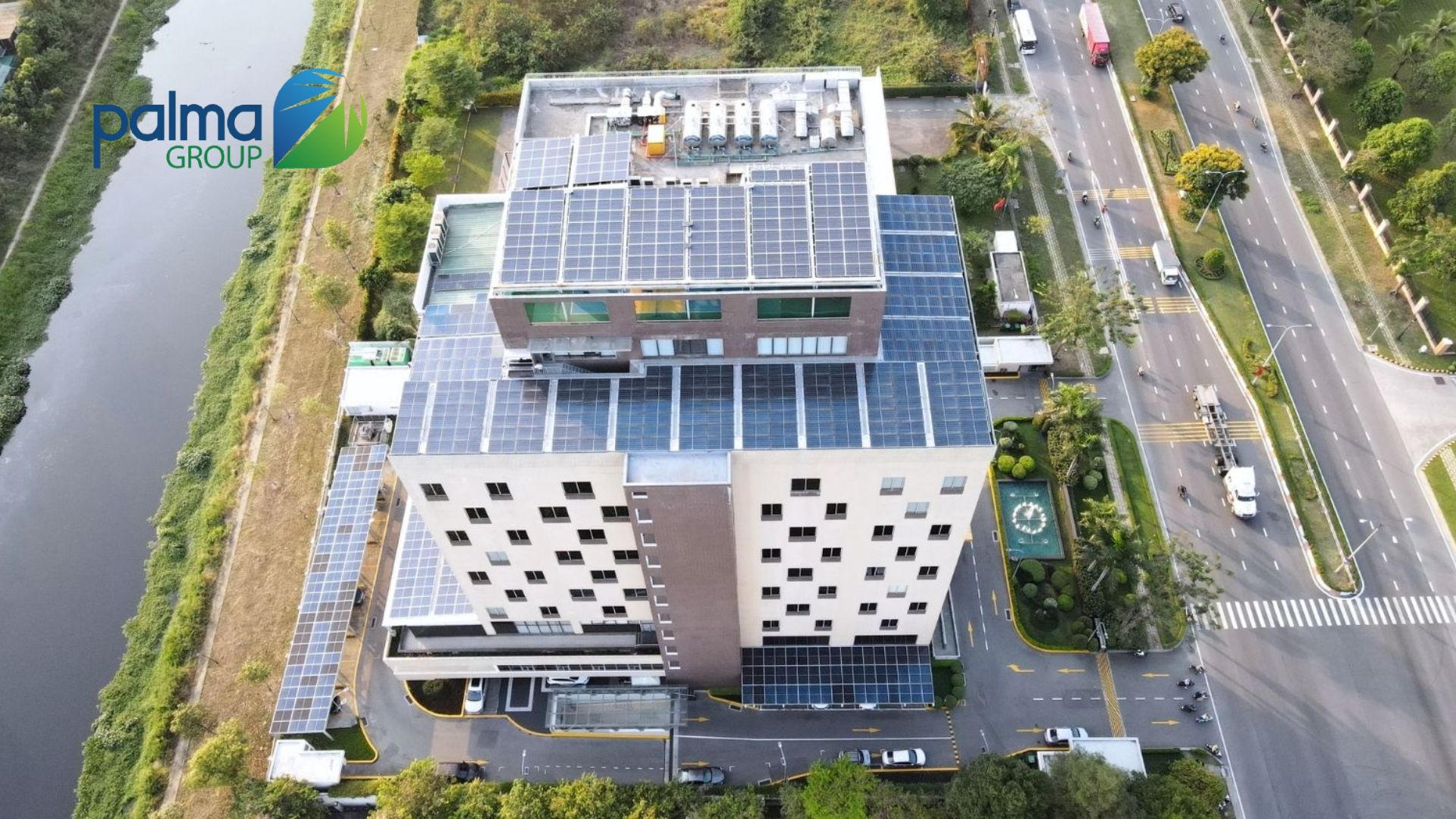
Every business has a unique emissions profile, operational model, and development strategy. Therefore, there is no one-size-fits-all approach to ESG implementation.
Start Your ESG Journey with Palma
At Palma, we partner with businesses from the very first step of their sustainability journey by delivering integrated solutions that include:
- Greenhouse Gas Inventory (GHG Inventory) and emissions baseline assessment.
- Energy Audits to identify opportunities for operational and energy optimization.
- ESG strategy development and Net Zero roadmap planning aligned with business objectives.
- Deployment of Solar PV, BESS, and EMS solutions to reduce carbon emissions, optimize energy costs, and improve operational efficiency.
- Advisory services on carbon credits and sustainability solutions, helping businesses prepare for evolving market expectations and global supply chain requirements.
A sustainable future does not begin with a report—it begins with understanding your business through reliable data.
If your organization is looking for a clear, measurable ESG roadmap aligned with its long-term development goals, Palma's team of experts is ready to support you every step of the way—from assessing your current situation to implementing practical solutions and continuously optimizing performance throughout your green transition journey.
26/06/2026 13:57:22
News other
_-08-01-2026-23-58-52.jpg "“Operation & Maintenance – Palma Solar Light” Technical Training")

_-08-01-2026-23-54-30.jpg "Why can the same solar technology deliver different performance across industrial plants?")
![[PALMA x NOVALAND] WORKSHOP ON MAINTENANCE AND SERVICING OF SOLAR LANDSCAPE LIGHT PLL-30 AT NOVA HILLS – MUI NE](https://palma.com.vn/upload/z3634653067260_15cb1f4d62b14f3a684fdf4ee9de4870_-11-08-2022-13-55-36.jpg "[PALMA x NOVALAND] WORKSHOP ON MAINTENANCE AND SERVICING OF SOLAR LANDSCAPE LIGHT PLL-30 AT NOVA HILLS – MUI NE")
Search
Breaking news
_-06-02-2026-14-31-59.jpg "Understanding kWp and kWh: The First Step Toward Effective Solar Investment")


_-24-10-2021-21-55-01.png "MicrosoftTeams-image (8)_-24-10-2021-21-55-01.png")
_-21-04-2022-13-38-01.png "PALMA SOLUTIONS JSC")
CONTACT US
MAP
Copyright © 2020 PALMA SOLUTIONS JSC
