


News
PALMA SOLUTIONS JSC
What is Greenwashing? Understanding the Risks and Responsibilities of Corporate Sustainability
In 2015, the Volkswagen Group incident became a prominent case study regarding systemic risks when corporate communication diverges from technical reality. The brand's "Clean Diesel" campaign once gained significant international traction by promising high-performance engines that met stringent emission standards. However, data from the U.S. Environmental Protection Agency (EPA) later revealed the presence of software designed to manipulate Nitrogen Oxide (NOx) emission results during testing conditions.
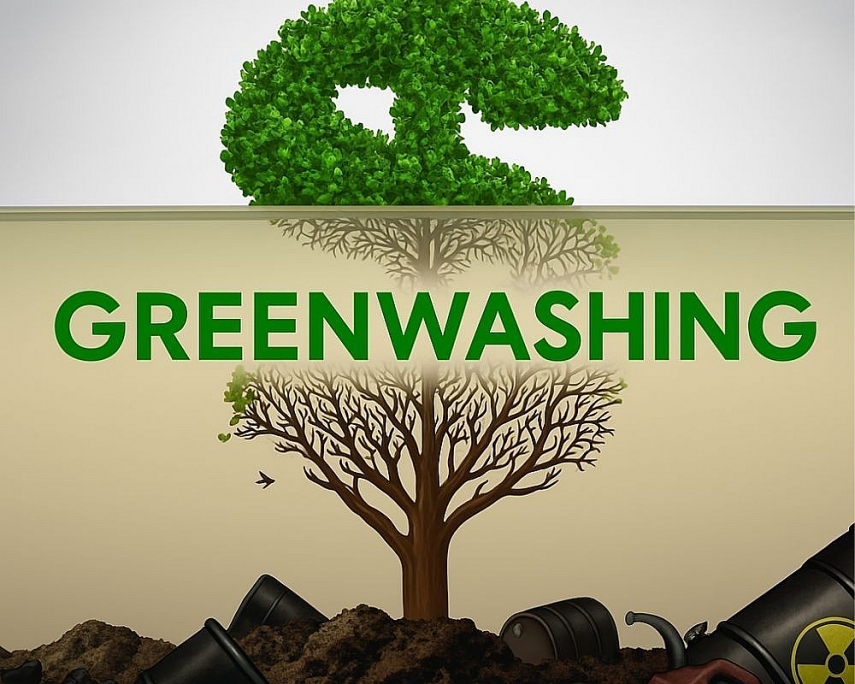
This event led not only to substantial financial repercussions but also sparked in-depth global discussions on Greenwashing. It is a phenomenon that occurs when sustainability disclosures are utilized as a tool for image optimization rather than reflecting substantive improvements in operational processes.
1. What is Greenwashing?
Greenwashing is the practice of marketing misleading or false claims about the environmental benefits of a company's products, services, or policies.
In simpler terms, it is an attempt by organizations to cultivate an "environmentally friendly" brand image through high-profile advertising campaigns, while failing to implement significant positive changes in production processes or failing to mitigate their negative environmental impacts.
2. The Importance of Identifying Misleading Environmental Claims
Within the context of the green economy, accurately analyzing and identifying claims is crucial for the following reasons:
- Optimization of Market Resources: Greenwashing can create false signals, diverting investment capital and consumer support away from businesses that are truly innovating for the environment.
- Maintaining Systemic Trust: The prevalence of inaccurate information fosters market skepticism, increasing barriers for organizations that are strictly adhering to ESG standards.
- Mitigating Ecological Consequences: When consumers choose products based on a belief in sustainability, misinformation can lead to unintended increases in consumption, putting further pressure on the ecosystem.
3. The "7 Sins" of Greenwashing
According to research by TerraChoice, greenwashing practices are generally categorized into seven identifying characteristics:
1. Hidden Trade-off: Highlighting a single "green" attribute while ignoring other significant environmental issues caused by the production process.
2. No Proof: Making environmental assertions that are not supported by accessible scientific data or certification from independent third-party auditors.
3. Vagueness: Using poorly defined terms such as "eco-friendly" or "natural" to create a broad, positive association without specific substance.
4. Irrelevance: Providing accurate but unhelpful information (e.g., claiming to be "CFC-free" even though CFCs have been legally banned for decades).
5. Fibbing: Making environmental claims that are simply false.
6. Lesser of Two Evils: Attempting to build a "green" image for a product that belongs to a category with an inherently high negative environmental impact.
7. Worshipping False Labels: Using graphic symbols or fake labels that mimic professional certifications to mislead consumers into a false sense of trust.
4. Global Regulatory Trends on Greenwashing
Regulatory bodies worldwide have shifted from encouraging voluntary disclosure to enforcing strict mandates:
- European Union: The Green Claims Directive requires businesses to substantiate environmental claims using scientific methodologies (such as Life Cycle Assessment - LCA) before publicizing them.
- United States: The FTC’s Green Guides have been updated to specifically regulate the use of terms like "recyclable" or "biodegradable" to minimize misleading content.
- Reporting Transparency: Businesses are increasingly mandated to publish sustainability reports according to international standards (such as GRI or ISSB), ensuring "green" claims are verifiable and measurable.
To eliminate the risks of greenwashing and transition toward a truly sustainable growth model, businesses require data-driven technical solutions and evidence-based strategies.
Palma partners with enterprises to bring transparency to environmental commitments through specialized services:
- ESG Strategic Consulting: Developing international-standard sustainability governance frameworks.
- Energy Audits & Greenhouse Gas (GHG) Accounting: Accurately quantifying environmental impacts using scientific measurement methods.
- Environmental Credit Solutions: Providing reputable environmental attributes to help businesses realize their Net Zero targets.
Contact Palma today to begin your journey toward a transparent and effective sustainability roadmap.
01/04/2026 14:41:31
News other
_-08-01-2026-23-54-30.jpg "Why can the same solar technology deliver different performance across industrial plants?")

![[PALMA x NOVALAND] WORKSHOP ON MAINTENANCE AND SERVICING OF SOLAR LANDSCAPE LIGHT PLL-30 AT NOVA HILLS – MUI NE](https://palma.com.vn/upload/z3634653067260_15cb1f4d62b14f3a684fdf4ee9de4870_-11-08-2022-13-55-36.jpg "[PALMA x NOVALAND] WORKSHOP ON MAINTENANCE AND SERVICING OF SOLAR LANDSCAPE LIGHT PLL-30 AT NOVA HILLS – MUI NE")
_-06-02-2026-14-31-59.jpg "Understanding kWp and kWh: The First Step Toward Effective Solar Investment")
Search
Breaking news

_-24-10-2021-21-55-01.png "MicrosoftTeams-image (8)_-24-10-2021-21-55-01.png")
_-21-04-2022-13-38-01.png "PALMA SOLUTIONS JSC")
CONTACT US
MAP
Copyright © 2020 PALMA SOLUTIONS JSC
